
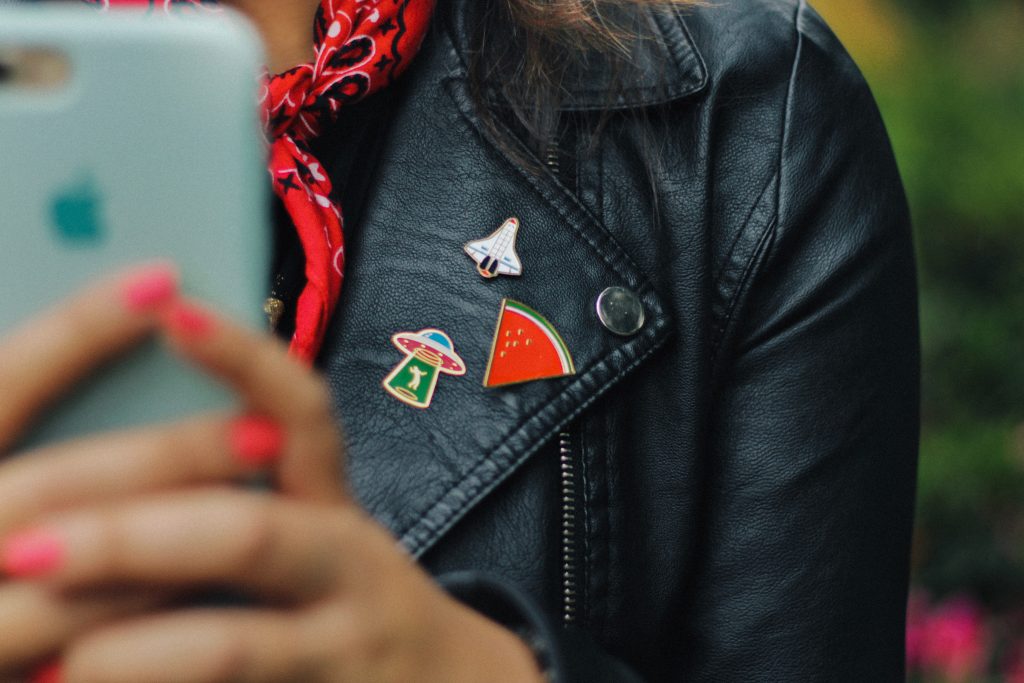
Custom lapel pins have come a long way from their origins. What began as a simple metalworking tradition has evolved into one of the most versatile branding and fashion accessories in use today — worn on runways, boardrooms, protest marches, and everything in between.
But how did we get here? The journey from early enamel craft to global streetwear collateral is worth understanding — especially if you’re considering how a custom pin might work for your brand.
A Cultural Object From the Start
The enamel and metalworking techniques behind modern lapel pins trace back centuries, with much of the craft tradition rooted in China. It’s no coincidence that many lapel pin manufacturers are based there today — the expertise has deep roots.
What gave pins their cultural charge, though, was how they were worn. By the late 1960s and early 1970s, badges and pins had become symbols of identity and dissent — worn by youth subcultures to signal belonging, values, and a deliberate departure from convention. A small piece of metal on a lapel or a jacket could say something about who you were without requiring a word.
That communicative power never went away. It just found new contexts.
The Student and Streetwear Era
For much of the latter 20th century, lapel pins lived most visibly on the denim jackets and backpacks of students and music fans. Decorating everyday items with pins became a form of personal expression — a low-cost, highly customisable way to turn a plain item into something that reflected your interests, your affiliations, your humour.
This wasn’t fashion in the high-end sense. It was grassroots, and that was the point. The pins were collectible, tradeable, and often deeply meaningful to the people wearing them. Band pins, sports pins, city pins, cause pins — the variety was part of the appeal.
This era laid the cultural groundwork for what came next: the moment the fashion industry took notice.
When Fashion Made Lapel Pins Legitimate
Lapel pins crossed from subcultural accessory into mainstream fashion over time — appearing on blazer lapels at formal events, pinned as brooches on evening wear, and incorporated into wedding styling as a detail-oriented finishing touch. The same item that once lived on a teenager’s backpack was now appearing in styled photoshoots and on the lapels of suits at corporate events.
That crossover mattered. It signalled that the pin’s appeal wasn’t tied to any single context — it was the format itself that worked. Small, detailed, wearable, personalised. Those qualities translated upward just as naturally as they had worked in casual settings.
Major fashion houses recognised this. Brands like Chanel and others incorporated pins and brooches into collections, adding significant prestige to a format that had previously been seen as purely casual or novelty. When luxury fashion endorses something, the market follows — and the appetite for custom and collectible pins grew alongside it.
Lapel Pins as a Branding Tool
What fashion normalised, the business world adopted. Today, lapel pins are one of the most widely used branded accessories in corporate, hospitality, aviation, and retail environments.
The reasons are practical as well as aesthetic:
Staff recognition. A pin presented to mark a training completion, a career milestone, or a performance achievement carries real weight. It’s physical, wearable, and more lasting than a certificate. Employees keep them — and wear them.
Brand visibility. A crew member, event staff member, or brand ambassador wearing a quality custom pin is a walking brand touchpoint. The pin signals that the organisation cares about detail, which reflects on the brand’s overall positioning.
Promotional and collectible items. Lapel pins make effective giveaways at events and trade shows precisely because people keep them. Unlike a flyer or a branded pen, a pin is something recipients choose to wear. That discretionary wear is genuine, ongoing brand exposure.
Retail and limited editions. Beauty brands, lifestyle labels, and streetwear companies produce pins as standalone retail products and limited-edition collectibles. The collectibility drives engagement in ways a standard product promotion rarely achieves.
The common thread: a well-designed lapel pin punches well above its weight relative to its cost. It’s a small object that does a lot of work.
The Custom Pin Today
The pin revival of the past decade has expanded both the market and the possibilities. Where once the choice was between a few standard formats, today’s custom lapel pins span soft enamel and hard enamel, die struck metal, acrylic, and more — in virtually any shape, finish, or size.
Independent artists produce runs of a few dozen. Airlines order thousands. Brands produce limited series. Sports teams create trading pins. Schools commission graduation pieces. The format scales in both directions.
What hasn’t changed is why they work: they’re tangible, personal, and designed to be kept.
If you’re looking to create a custom lapel pin for your brand, team, event, or product range, MetalX has produced premium custom pins for organisations of all sizes since 2004. Send us your design, brief, or concept and we’ll take it from there — with a design proof typically within 24 hours and free worldwide shipping on every order.